The Rise of ASIC Solo Mining
ASIC solo mining is surging. Learn how it works, odds, setup options, risks.
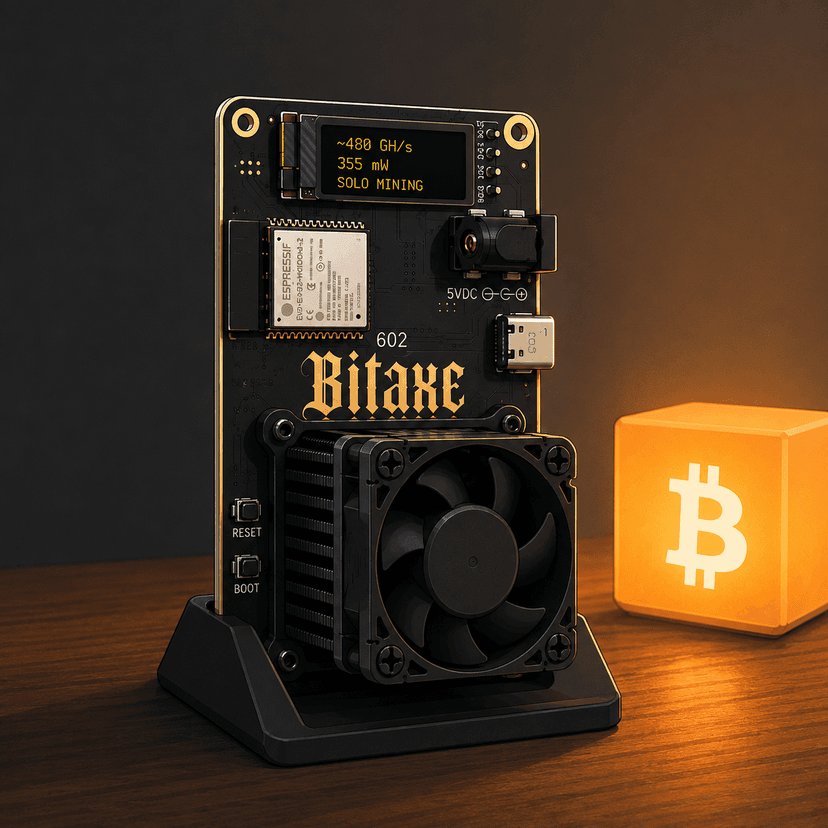
The new wave of ASIC solo miners: what you need to know
A growing number of miners are pointing one or more ASICs at solo mining. The appeal is obvious: if you win, you keep 100 percent of the block reward and fees in a single payout. Recent headlines of small operators finding blocks have fueled interest, and easy-to-use solo pools have lowered the barrier.
This article explains how ASIC solo mining works, why interest is rising now, how to evaluate your odds, and how to set up and manage risk if you decide to try it. When you want current revenue and efficiency comparisons for specific machines, check live data on asicminervalue.com.
What solo ASIC mining is (and what it is not)
- Pool mining: you submit shares to a pool, receive regular payouts in proportion to your contributed work, and pay a pool fee. Variance is low and cash flow is predictable.
- Solo mining: you only get paid if your hashrate discovers a valid block. There are no partial payouts. Variance is extreme and cash flow is unpredictable.
You can solo mine in two ways:
- Self-hosted: run your own full node and stratum server, build your own block templates, and connect your ASICs directly.
- Through a solo service: point your ASICs to a “solo pool” that does not aggregate payouts. If your machine finds a block, the full reward goes to your address, minus a small service fee.
Why interest is rising now
Several forces are converging:
- Fee spikes: during busy periods, transaction fees can swell the block reward significantly. Solo miners capture the entire fee windfall if they hit a block at the right time.
- Post-halving economics: with the subsidy lower, fees matter more. Some miners view solo mining as a way to occasionally secure an outsized payout that can move the needle.
- Visibility of wins: social posts about home or small-farm wins show it is possible, even if unlikely. Survivorship bias is strong, but the stories inspire experimentation.
- Friction is lower: mature solo services and better firmware make it straightforward to point a rig at a solo endpoint for a period.
The math of luck: evaluating your odds
Bitcoin produces about 144 blocks per day on average. Your expected share of those blocks equals your share of total network hashrate. The statistics are well modeled by a Poisson process:
- Define s as your hashrate divided by the network hashrate.
- Expected blocks in D days is λ = 144 × s × D.
- Probability of finding at least one block in D days is approximately 1 − e^(−λ).
How to apply this in practice:
- Estimate s by comparing your hashrate to the current network total. Use your ASIC’s live hashrate and a reputable source for network hashrate.
- Choose a time window D that matches your tolerance for waiting.
- Compute λ and then 1 − e^(−λ) to get your odds of at least one win in that window.
Key takeaways:
- With small hashrate, λ is tiny over practical timeframes. Odds can remain low even over months.
- Expected value is similar between solo and pool mining, minus any fees. The difference is variance: solo concentrates all payouts into rare jackpots.
- Fee volatility adds optionality. Solo miners who happen to win during a fee spike keep the entire uplift, which a pool would otherwise spread across all contributors.
Who should consider solo mining
- Large operators who can dedicate meaningful hashrate while accepting variance. Bigger s improves odds and reduces the waiting time for a hit.
- Hobbyists who treat solo mining as a lottery ticket with strictly limited downside. Cash flow must be resilient to long dry spells.
- Miners seeking sovereignty over block templates and payouts, especially when self-hosting a node.
Who should be cautious:
- Anyone dependent on steady daily payouts to cover operating expenses or debt service.
- Operators with poor network connectivity or unstable power, which increases stale and orphan risk.
Setup options: self-hosted vs solo service
Self-hosted solo
You control block construction and payout directly. Requirements:
- A fully synced Bitcoin Core node configured for mining RPC (getblocktemplate).
- A stratum server or mining proxy compatible with your ASICs.
- Reliable, low-latency network and accurate system time.
- Robust monitoring, logging, and alerts.
Best practices:
- Maintain a well-connected node and enable compact block relay. Consider specialized relay services to reduce orphan risk.
- Keep your mempool healthy to build high-fee templates. Ensure your node is not resource-constrained.
- Use UPS and surge protection. Avoid unnecessary reboots during fee spikes.
Solo via service
You outsource node and template management but still get a winner-takes-all payout.
What to check:
- Service reputation, uptime, and transparency.
- Fee schedule, payout mechanics, and minimums. Many solo services pay directly to the address you use as the “username.”
- Geographic endpoints to minimize latency and stale shares.
How to point your ASIC:
- Set the stratum URL to the solo endpoint.
- Use your payout address as the worker name if the service supports it.
- Monitor stale rate, temperature, and hashrate in real time.
Managing risk and variance
Solo mining is a variance bet. Treat it like one:
- Allocate a slice of hashrate: point most rigs to a pool for baseline cash flow and dedicate a defined percentage to solo.
- Time your attempts: consider soloing during periods of elevated fees. There is no guarantee of a win, but the jackpot is larger when fees are high.
- Set a time or energy budget: commit to a fixed number of days or kWh for solo attempts, then reassess.
- Track opportunity cost: compare what you would have earned via pools over the same period using live figures on asicminervalue.com.
Operational tips to tilt the odds in your favor:
- Keep connectivity tight: choose the closest stratum endpoint, use wired networking, and monitor latency.
- Minimize stales: ensure firmware is up to date, avoid over-aggressive overclocks that increase invalid shares.
- Control heat and dust: stable thermals reduce throttling and downtime.
Economics in context
- Expected value parity: apart from fees, solo and pool mining share the same long-run expected value. What changes is payout distribution.
- Fee optionality: solo miners capture the entire fee bundle in the block they find, which can materially exceed the subsidy during spikes.
- Pool fees vs solo fees: pools charge ongoing fees for smoothing your income. Solo services typically charge only when you win, or a modest continuous fee for infrastructure. Compare structures carefully.
- Cash flow reality: power bills are due on schedule. Unless you can carry operating costs without regular income, limit exposure to solo variance.
When evaluating machines, electricity rates, and daily revenue, use the live dashboards on asicminervalue.com instead of static assumptions. Conditions change quickly, and your decision should reflect current efficiency and network dynamics.
About those recent solo wins
Yes, multiple solo miners have found blocks in recent months, including small operators. These events are real but rare. Two cautions:
- Survivorship bias: wins get amplified on social media. Long losing streaks are less visible.
- Replicability: odds do not improve because someone else recently won. Each hash is an independent trial.
Treat wins as proof of possibility, not probability.
A practical checklist
- Define goals: jackpot hunting, sovereignty, or research.
- Quantify odds: estimate s, pick D, compute your probability of at least one win.
- Choose setup: self-hosted node or reputable solo service.
- Harden operations: latency, power, thermals, monitoring, alerts.
- Allocate capital: decide hashrate split and time budget. Revisit weekly.
- Benchmark opportunity cost: compare against pool payouts using live data on asicminervalue.com.
Solo mining with ASICs is neither a magic profit button nor a fool’s errand. It is a deliberate variance trade. Understand the math, prepare your infrastructure, and size the bet so that a long dry spell will not sink the operation. If and when you do land a block, the payout and the satisfaction are hard to match.